Event History
Created in 2010 by the COAL association, the COAL Prize is a vehicle for identifying, promoting, and disseminating artists who, throughout the world, bear witness to, imagine, and experiment with solutions for transforming territories, lifestyles, organisation, and production. Together, these artists help to make changes visible and build a new collective narrative, a shared heritage in development, and a positive and necessary framework for everyone to find the means and inspiration to implement changes towards a more sustainable and just world.
What Makes this event different?
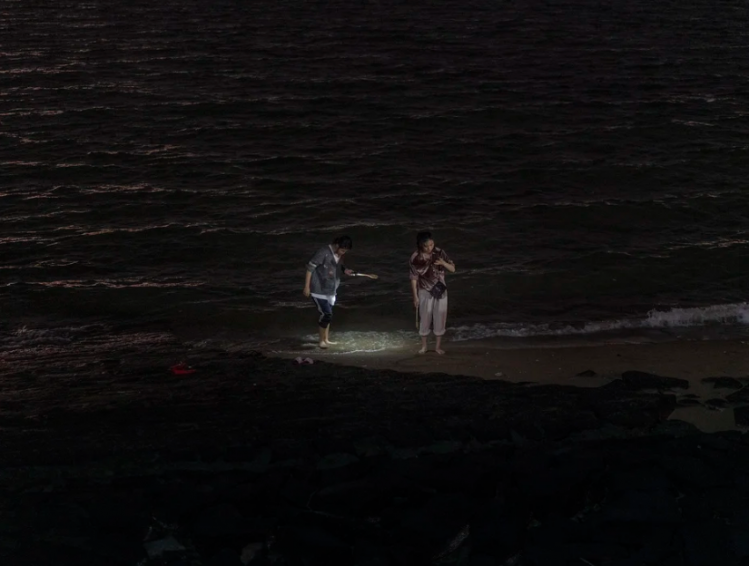
The COAL Prize 2026 invites artists to defend the night as a common good, a major ecological issue for the regeneration of life, a refuge, a diversity of languages to be celebrated, a right to rest and to darkness. Inventing stories to relearn how to inhabit the shadows, creating art with the night, is to contribute to an ecology of rhythms. Restoring the fear of the night is a perfect antidote to anthropocentrism, because it forces us to be humble, confronting us with the depths of the sky, the intimacy of the vast, the immensity of the cosmos.
We oppose day and night even though they form a single living unity, traversed by opposites. For us, diurnal beings so dependent on sight, night often begins with a loss. Between dusk and dawn, it suspends time, veils the world, compels withdrawal. The certainties of day recede, uncertainty rises to the surface, and this is perhaps why it remains the time of contemplation and storytelling, where, in anticipation of the coming day, dreams and imagination awaken. Night displaces the sovereignty of the image.
But it is retreating, bleached, colonized by the boundless spread of artificial lights on land, at sea, in the sky, until the Milky Way itself is erased from our memories. Skyglow, the halo of artificial light suspended like a dome above cities, can be read from space. Outside urban centers, the multiplication of small illuminated pockets fragments the night, cuts continuities, turns corridors into dead ends, and sets lethal traps for birds, insects, and so many other species disoriented by an excess of light.
For some thirty years now, the term nocturnal environment has taken hold to name this threatened vital milieu. A majority of animals live at night. In landscapes saturated with human presence, darkness sometimes becomes the last interval in which to move without being seen, without being driven off one’s path. It opens times for migrations, mating, pollination and crossings. The recent concept of the dark ecological network perfectly expresses the urgency of thinking about night as a network of continuities of darkness to be preserved.
The people of the night live in a world of listening and olfaction, where one locates oneself through rhythms, echoes, aerosols, and wafts of scent. Night changes the grammar of the world. Even flora changes its diction. Some flowers open at night and perfume the air to attract specific pollinators.
It is also an essential time of regeneration for organisms and metabolisms, a discreet workshop where energies and balances are redistributed, where excesses are repaired. The nocturnal drop in temperatures contributes to cooling soils and the atmosphere and supports water cycles. Artificially prolonged daytime weakens these functions. The exhaustion of the world also stems from the drift toward continuous operation, twenty-four hours a day, which denies alternation and consumes bodies and environments alike. Darkness and rest are, nonetheless, vital necessities.
To borrow Édouard Glissant’s expression, night calls for a right to opacity, recognizing the importance of being able to elude the imperatives of transparency and visibility. In politics, night signifies both vigilance and eclipse. A place of welcome for resistance and marginality, it is the chosen time of those who hold on when day closes nights of assemblies and vigils. Nuit Debout offered a clear image of this. But conversely, it can also designate the dark times of totalitarian powers. This is the paradox of night: it emancipates when it shifts the social clock to open a common space; it oppresses when it obscures thought.